Artificial intelligence is changing the software architecture, and we are expecting significant trends to come in 2026. AI solutions will likely bring transformative changes to software development and deployment as it is expected that the technology will continue to develop. In this extensive piece, we look at ten major changes in software architecture driven by AI that are set to shape the future of the tech world.
1. AI-Driven Microservices
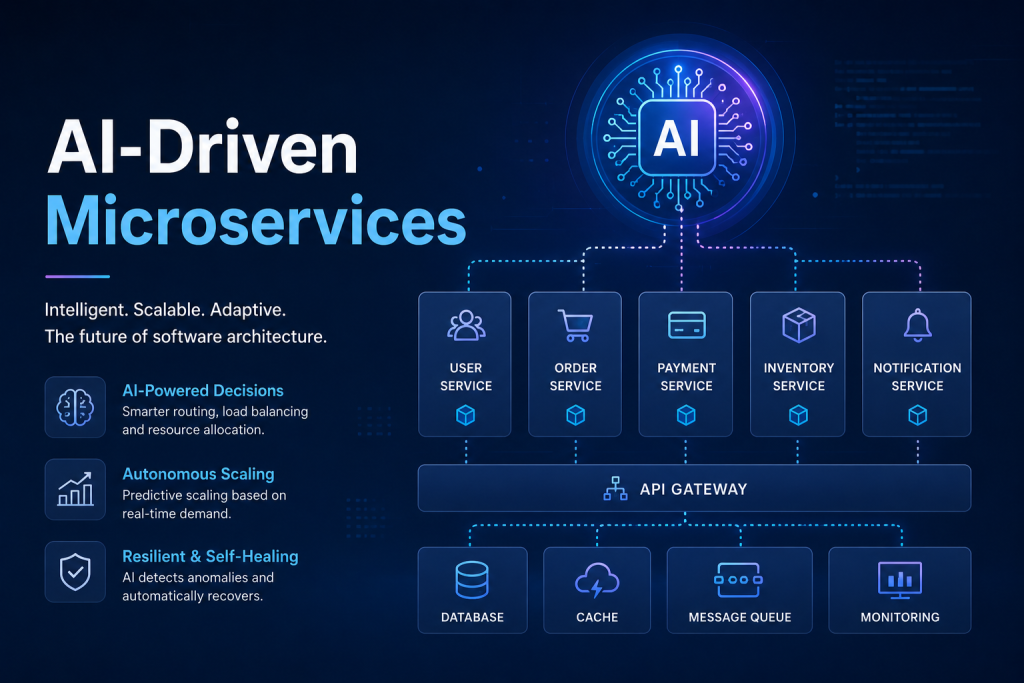
Microservices architecture is mainly known for how easily it can be changed and for its ability to scale, features that will help AI integration become more efficient. Using AI techniques microservices could, by 2026, not only manage service dependencies more effectively but also make work distribution decisions which are optimal. Systems will be able to self-regulate according to the live demand, resulting in enhanced performance and resource optimization.
Additionally, incorporating AI into microservices will help in cutting down the downtime by forecasting the potential failures even before they happen. Companies will be able to carry out their activities without any interruptions by this proactive method. Consequently, system disruptions will have minimal impact and constant service delivery to end-users will be ensured.
2. Autonomous DevOps
DevOps methods mean continuous integration and delivery to a large extent for modern software development. In 2026, a big part of DevOps tasks will be automated, and this will be autonomous with only a few human interventions. Code testing, integration, deployment and monitoring will be done by AI tools, thus, there will be fewer errors and a faster development cycle will be received. You can also get ideas on carpet tiles designs through this Ai Powered architecture software.
This disposition towards autonomous DevOps will grant team members more time for innovation and strategic planning by not having to take care of the routine operational tasks. Thus, the speed of the releases and their quality of software will be enhanced, besides the overall improvement in productivity and efficiency in software development processes.
3. Intelligent Edge Computing
With the growing Internet of Things (IoT), the need for real-time data processing also adds on. Intelligent edge computing will serve as an important player bringing computation closer to the data source. In 2026, AI is expected to power that edge devices will be able to do data processing locally, decision making on the spot, as well as the lag caused by data sending to centralized data centers would be reduced.
This change will span smart cities, vehicle levels of autonomy, and also industrial IoT. By conserving water and enhancing privacy, the deployment of smart edge computing will make sure the efficient operation of IoT ecosystems.
4. AI-Augmented Cloud Services
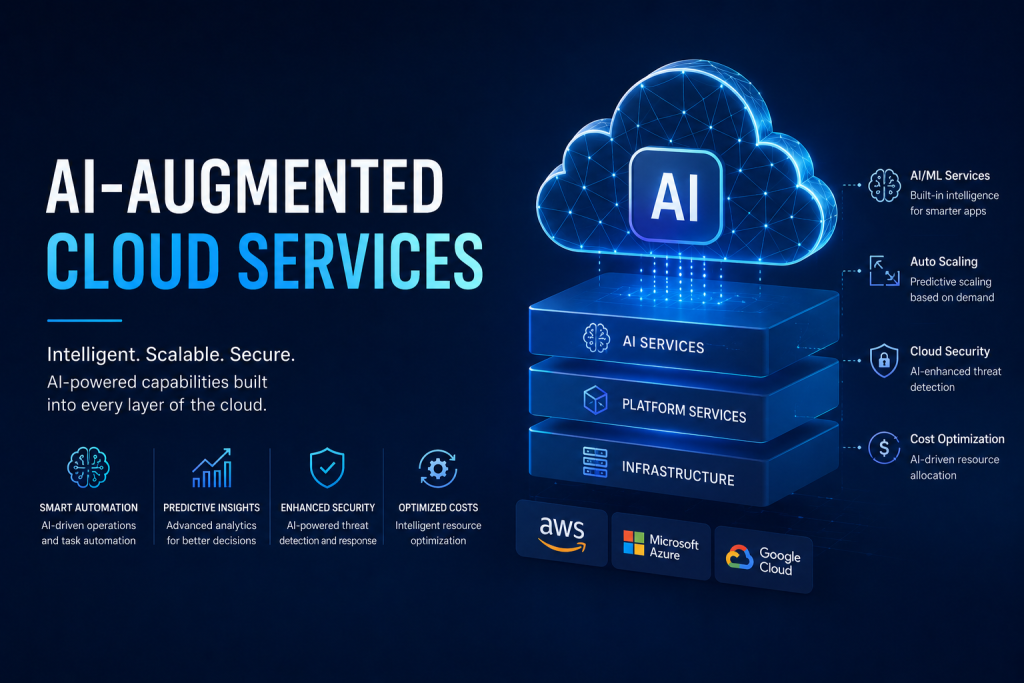
The integration of AI with cloud services will enhance resource management and operational optimization. AI techniques will improve the response time and reduce maintenance costs by using predictive algorithms to optimize resource utilization, predict system failures, and automate maintenance tasks through data analysis. In this regard, cloud environments will remain stable, cost-effective, and responsive to dynamic workloads.
In addition, AI-based pattern recognition will offer solutions for the better understanding of customer behavior and system troubleshooting that would enable the companies to deliver more personalized and higher customer satisfaction. Consequently, AI-augmented cloud services will be identified as indispensable tools for the companies that want to keep the edge in the market.
5. AI-Enhanced User Experience (UX)
The AI-driven insights will be the key to revamp the intuitive, responsive, and personalized user interfacing which will be provided by AI. AI algorithms will take up user behavior and preferences and with this in mind they will make content and associations on a real-time basis even more individualized and interactive. The result will be greater user satisfaction and higher user engagement.
For companies that implement AI in UX, this will result in increased customer loyalty as well as a better understanding of the needs of the user. Personalization will not only be around the content anymore, but there will also be adaptive interfaces that users will interact with, that will be reconfigured dynamically by their own preferentials and behavior patterns.
6. AI-Powered Cybersecurity
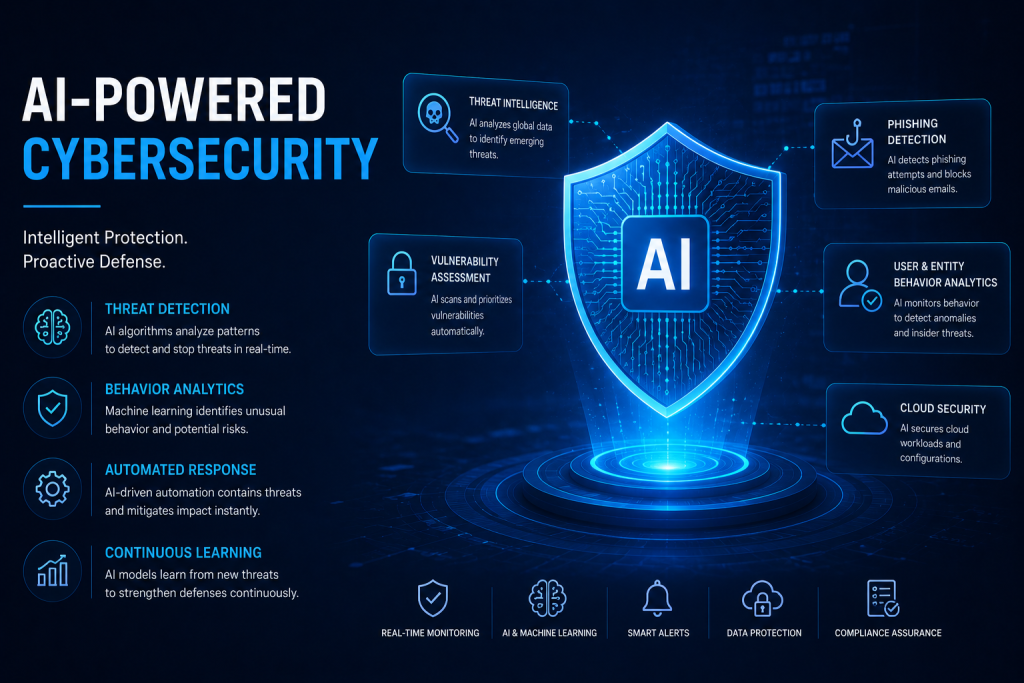
Owing to the ever-increasing complexity of cyber threats, traditional security measures are proving to be inadequate. AI-based cybersecurity solutions will be the driving force behind the revolution of threat detection and prevention strategies. By 2026, AI will identify deviations, detect potential threats, and, at the same time, between them effectively to mitigate the risks.
The comprehensive cover against the constantly arising cyber-attacks that can be guaranteed by AI’s capacity to adapt and learn from new threats will be the main selling feature of the organizations that opt for AI-based cybersecurity. Companies that employ this approach of safeguarding their data will not only assure their data privacy but also ensure trust and credibility among users and stakeholders.
7. Continuous AI Integration
The continuous iteration of AI into the software development process will bring changes to software development approaches. By 2026, AI will be an indwelling system participating in the whole development lifecycle, from requirements specification to production and maintenance. This not only is a continuous AI integration but also it allows applications to grow with the changing user needs and technological enhancements.
Through the automatic realization of the same tasks and a comprehensive data approach to decision-making, AI will help the development teams to focus on higher-level design concerns and strategic objectives. As a consequence, AI-integrated software will be more flexible, efficient, and lasting over time.
8. AI-Driven Data Management
Through the use of AI technologies by the year 2026, data management will be on an all-time level of efficiency. AI tools will make the process of data cleanup, data integration, and data analysis automation easy and thus will reduce human labor for dealing with huge data sets. Data will also be a big part of the AI algorithm’s effort to find patterns and exceptions making businesses make better decisions.
This enhancement in data management will also facilitate the development of predictive analytics models, allowing companies to anticipate market trends and consumer behaviors. The AI data management solution will not only smoothen operations but will also give the competitive edge to the businesses in adaptability and responsiveness to market changes.
9. AI-Powered Predictive Maintenance
Early maintenance will launch a new era wherein AI will guide industries insightfully in the field of equipment and system maintenance. This technology will be applied by 2026 in the examination of both historical and current data so that manual and maintenance repair seasons will be able to predict longer support than they serve now thereby enabling the service of potential issues before they become an actual hazard.
This proactive approach will result in reduced downtime, extended equipment lifespan, and significant cost savings. The AI-powered industry maintenance will involve AI throughout the whole work process, including in the areas of project management.
10. Enhanced Collaboration with AI Assistants
In the software development industry, these virtual assistants will bring about revolutionary changes in collaboration and project management. These AI assistants will be able to schedule meetings, share tasks and open communication channels by 2026, thus reducing documentation time besides boosting up performance thanks to the AI management of staff schedules.
But in addition to aiding them in admin tasks, these AI assistants will send them feedback which will help teams make evidence-based decisions. Thus, the project lifecycle management will become more effective with virtually no negative side effects.
Apart from these, AI will help in the software architecture through improvement, security and a user-oriented design which will, in turn, change the industry’s future. The reason is that the future paths of technology in 2026 could be determined by various supportive trends and solutions which will not only be introduced by these companies and developers but also will be influenced by their capture and creation. The companies that take on and adapt to these innovations are more likely to become the leaders of a new era where AI not only supports but also boosts the development, deployment, and experience of technology.
Related Posts :-